
<?xml version="1.0" encoding="UTF-8"?>
<rss version="2.0"
	xmlns:content="http://purl.org/rss/1.0/modules/content/"
	xmlns:wfw="http://wellformedweb.org/CommentAPI/"
	xmlns:dc="http://purl.org/dc/elements/1.1/"
	xmlns:atom="http://www.w3.org/2005/Atom"
	xmlns:sy="http://purl.org/rss/1.0/modules/syndication/"
	xmlns:slash="http://purl.org/rss/1.0/modules/slash/"
	>

<channel>
	<title>Big Ideas Math Blog</title>
	<atom:link href="http://www.bigideasmath.com/blog/feed" rel="self" type="application/rss+xml" />
	<link>http://www.bigideasmath.com/blog</link>
	<description>For Middle School Math - By Ron Larson and Laurie Boswell</description>
	<lastBuildDate>Thu, 16 Feb 2012 16:22:37 +0000</lastBuildDate>
	<language>en</language>
	<sy:updatePeriod>hourly</sy:updatePeriod>
	<sy:updateFrequency>1</sy:updateFrequency>
	<generator>http://wordpress.org/?v=3.0</generator>
		<item>
		<title>Mathematical Practices Video Series: Math Practice #4</title>
		<link>http://www.bigideasmath.com/blog/professional-development/mathematical-practices-video-series-math-practice-4</link>
		<comments>http://www.bigideasmath.com/blog/professional-development/mathematical-practices-video-series-math-practice-4#comments</comments>
		<pubDate>Thu, 16 Feb 2012 16:17:36 +0000</pubDate>
		<dc:creator>Big Ideas Learning</dc:creator>
				<category><![CDATA[Professional Development]]></category>
		<category><![CDATA[Standards for Mathematical Practice]]></category>
		<category><![CDATA[Video Series]]></category>

		<guid isPermaLink="false">http://www.bigideasmath.com/blog/?p=803</guid>
		<description><![CDATA[Watch and learn as Denise McDowell demonstrates Mathematical Practice #4 in the classroom.  <a href="http://www.bigideasmath.com/blog/professional-development/mathematical-practices-video-series-math-practice-4">Continue reading <span class="meta-nav">&#8594;</span></a>]]></description>
			<content:encoded><![CDATA[<p><em>Have you been following our video series on the Standards for Mathematical Practice? If not, you can catch up with our posts on <a title="Mathematical Practices Video Series: Math Practice #1" href="http://www.bigideasmath.com/blog/professional-development/mathematical-practices-video-series-mp-1" target="_blank">Mathematical Practice #1</a>, <a title="Mathematical Practices Video Series: Math Practice #2" href="http://www.bigideasmath.com/blog/professional-development/mathematical-practices-video-series-math-practice-2" target="_blank">Mathematical Practice #2</a>, and <a title="Mathematical Practices Video Series: Math Practice #3" href="http://www.bigideasmath.com/blog/professional-development/mathematical-practices-video-series-mathematical-practice-3" target="_blank">Mathematical Practice #3</a>. Today we are discussing Mathematical Practice #4: Model with mathematics. </em></p>
<p><em>There are multiple parts to each practice.  The parts help students develop the habit of mind that is the main practice.  Remember that the practices are defined as ways to help students become mathematically proficient.  As we look at each practice, think of ways we can help students to take ownership of these practices.</em></p>
<p><iframe width="560" height="315" src="http://www.youtube.com/embed/lnTG8Bdq-ac" frameborder="0" allowfullscreen></iframe></p>
<p>In the fourth video, students are learning how to use data displays to make decisions about real life situations. The Essential Question asks: “How can you display data in a way that helps you make decisions?”</p>
<p>Observe how the teacher makes a connection to real life, thus providing meaning to the mathematics being taught. Notice how she validates each student’s choice for graphing data but asks the student to justify whether or not his/her decision makes sense. When students begin to work on problems in their groups, they will be able to use these strategies, thereby building their proficiency.</p>
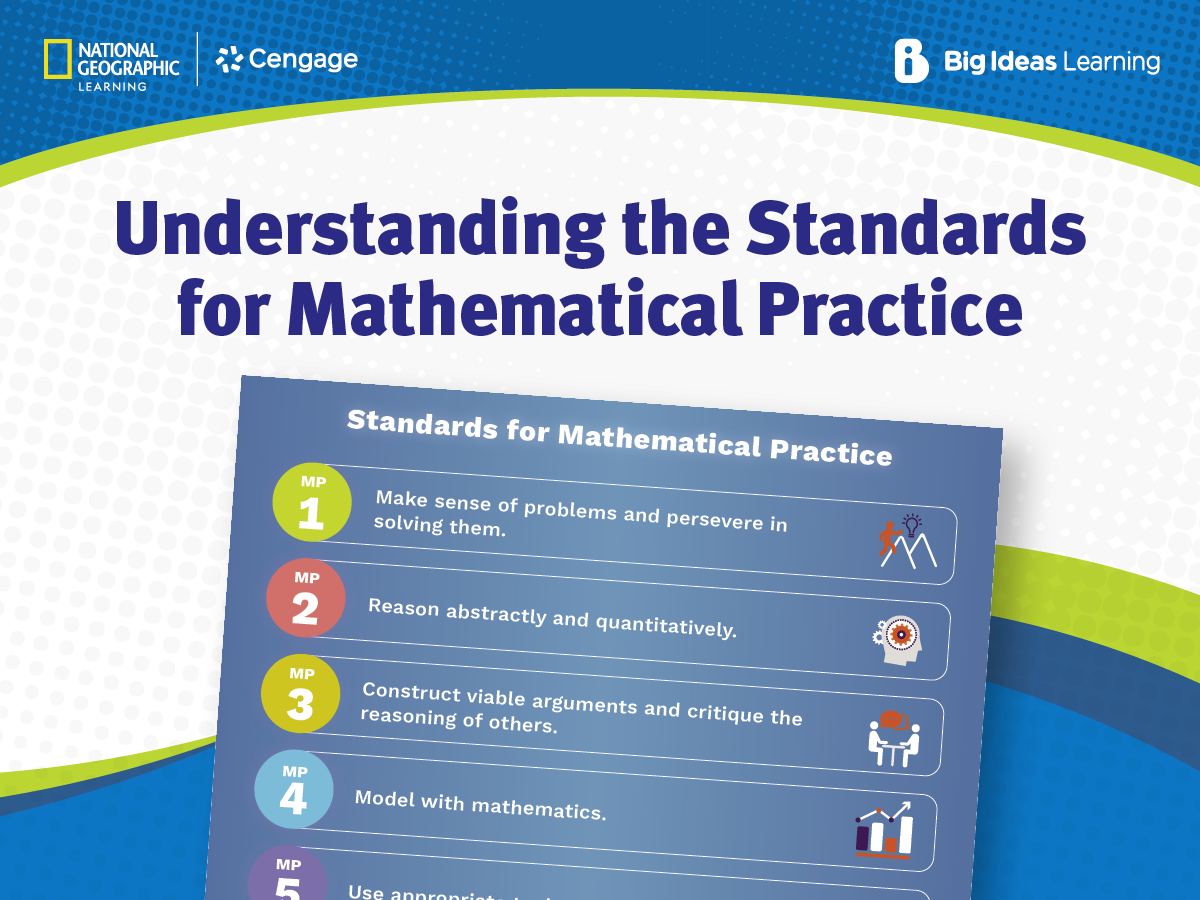
<p><strong>Mathematical Practice #4: Model with mathematics.</strong></p>
<p style="padding-left: 30px;">•  Mathematically proficient (MP) students can apply the mathematics they know to solve problems arising in everyday life, society, and the workplace.</p>
<p style="padding-left: 30px;">•  MP students who can apply what they know are comfortable making assumptions and approximations to simplify a complicated situation, realizing that these may need revision later.</p>
<p style="padding-left: 30px;">•  MP students are able to identify important quantities in a practical situation and map their relationships using such tools as diagrams, two-way tables, graphs, flowcharts and formulas.</p>
<p style="padding-left: 30px;">•  MP students can analyze relationships mathematically to draw conclusions.</p>
<p style="padding-left: 30px;">•  MP students routinely interpret their mathematical results in the context of the situation and reflect on whether the results make sense, possibly improving the model if it has not served its purpose.</p>
<p>As you look at your classroom, you probably see students with varying degrees of expertise in this practice.  Our job, as educators, is to help students develop a habit of mind that helps them naturally think before they begin to model mathematics. Ask yourself:</p>
<p style="padding-left: 30px;">Do you give students the opportunity to discuss the connections between math and everyday life?</p>
<p style="padding-left: 30px;">Are students comfortable making suggestions regardless of their accuracy?</p>
<p style="padding-left: 30px;">Do students understand the importance of data displays?</p>
<p>As students take ownership of their learning and develop expertise using the mathematical practices, the content standards (knowledge, skills and understandings, procedural skills and fluency, and application and problem solving) will make sense, allowing students to achieve success in mathematics.</p>
]]></content:encoded>
			<wfw:commentRss>http://www.bigideasmath.com/blog/professional-development/mathematical-practices-video-series-math-practice-4/feed</wfw:commentRss>
		<slash:comments>0</slash:comments>
		</item>
		<item>
		<title>Mathematical Practices Video Series: Math Practice #3</title>
		<link>http://www.bigideasmath.com/blog/professional-development/mathematical-practices-video-series-mathematical-practice-3</link>
		<comments>http://www.bigideasmath.com/blog/professional-development/mathematical-practices-video-series-mathematical-practice-3#comments</comments>
		<pubDate>Thu, 09 Feb 2012 16:54:30 +0000</pubDate>
		<dc:creator>Big Ideas Learning</dc:creator>
				<category><![CDATA[Professional Development]]></category>
		<category><![CDATA[Standards for Mathematical Practice]]></category>
		<category><![CDATA[Video Series]]></category>

		<guid isPermaLink="false">http://www.bigideasmath.com/blog/?p=787</guid>
		<description><![CDATA[Watch our video for Mathematical Practice #3 of The Standards for Mathematical Practice and learn more about implementing it in your classroom. <a href="http://www.bigideasmath.com/blog/professional-development/mathematical-practices-video-series-mathematical-practice-3">Continue reading <span class="meta-nav">&#8594;</span></a>]]></description>
			<content:encoded><![CDATA[<p><em>We are continuing with our video series on <a title="The Standards for Mathematical Practice" href="http://www.corestandards.org/the-standards/mathematics/introduction/standards-for-mathematical-practice/" target="_blank">The Standards for Mathematical Practice</a>. So far, we&#8217;ve looked at <a title="Mathematical Practices Video Series: Math Practice #1" href="http://www.bigideasmath.com/blog/professional-development/mathematical-practices-video-series-mp-1" target="_blank">Mathematical Practice #1</a> and <a title="Mathematical Practices Video Series: Math Practice #2" href="http://www.bigideasmath.com/blog/professional-development/mathematical-practices-video-series-math-practice-2" target="_blank">Mathematical Practice #2</a>, and today we are sharing our video for Mathematical Practice #3.</em></p>
<p><em>There are multiple parts to each practice. The parts help students develop the habit of mind that is the main practice. Remember that the practices are defined as ways to help students become mathematically proficient. As we look at each practice, think of ways we can help students to take ownership of these practices.</em></p>
<p><iframe width="560" height="315" src="http://www.youtube.com/embed/4Brp578YJrw" frameborder="0" allowfullscreen></iframe></p>
<p>In the third video, students are learning how to determine whether or not figures are similar to each other. The Essential Question asks: “What information do you need to know to find the dimensions of a figure that is similar to another figure?”</p>
<p>Observe how the teacher engages the students in demonstrating similar figures. Notice how she incorporates previous knowledge and mathematical terminology as she instructs students to form similar right triangles.  Students are justifying their conjectures and providing valid arguments.  When they begin to work on problems in their groups, they will be able to use these strategies, thereby building their proficiency.</p>
<p><strong>Mathematical Practice #3: Construct viable arguments and critique the reasoning of others.</strong></p>
<p style="padding-left: 30px;">• Mathematically proficient (MP) students understand and use stated assumptions, definitions, and previously established results in constructing arguments.</p>
<p style="padding-left: 30px;">• MP students make conjectures and build a logical progression of statements to explore the truth of their conjectures.</p>
<p style="padding-left: 30px;">• MP students are able to analyze situations by breaking them into cases, and can recognize and use counterexamples.</p>
<p style="padding-left: 30px;">• MP students justify their conclusions, communicate them to others, and respond to the arguments of others.</p>
<p style="padding-left: 30px;">• MP students reason inductively about data, making plausible arguments that take into account the context from which the data arose.</p>
<p style="padding-left: 30px;">• MP students are also able to compare the effectiveness of two plausible arguments, distinguish correct logic or reasoning from that which is flawed, and—if there is a flaw in an argument—explain what it is.</p>
<p style="padding-left: 30px;">• Students learn to determine domains to which an argument applies. They can listen or read the arguments of others, decide whether they make sense, and ask useful questions to clarify or improve the arguments.</p>
<p>As you look at your classroom, you probably see students with varying degrees of expertise in this practice.  Our job, as educators, is to help students develop a habit of mind that helps them naturally think before they begin to construct viable arguments and critique others. Ask yourself:</p>
<p style="padding-left: 30px;">Do you give students opportunities to rely on previous knowledge?</p>
<p style="padding-left: 30px;">Are students given enough time to explain their thought processes?</p>
<p style="padding-left: 30px;">Do they validate the conclusions of others?</p>
<p>As students take ownership of their learning and develop expertise using the mathematical practices, the content standards (knowledge, skills and understandings, procedural skills and fluency, and application and problem solving) will make sense, allowing students to achieve success in mathematics.</p>
]]></content:encoded>
			<wfw:commentRss>http://www.bigideasmath.com/blog/professional-development/mathematical-practices-video-series-mathematical-practice-3/feed</wfw:commentRss>
		<slash:comments>0</slash:comments>
		</item>
		<item>
		<title>Mathematical Practices Video Series: Math Practice #2</title>
		<link>http://www.bigideasmath.com/blog/professional-development/mathematical-practices-video-series-math-practice-2</link>
		<comments>http://www.bigideasmath.com/blog/professional-development/mathematical-practices-video-series-math-practice-2#comments</comments>
		<pubDate>Tue, 31 Jan 2012 14:21:35 +0000</pubDate>
		<dc:creator>Big Ideas Learning</dc:creator>
				<category><![CDATA[Professional Development]]></category>
		<category><![CDATA[Standards for Mathematical Practice]]></category>
		<category><![CDATA[Video Series]]></category>

		<guid isPermaLink="false">http://www.bigideasmath.com/blog/?p=771</guid>
		<description><![CDATA[Watch our video for Mathematical Practice #2 of The Standards for Mathematical Practice and learn more about implementing it in your classroom. <a href="http://www.bigideasmath.com/blog/professional-development/mathematical-practices-video-series-math-practice-2">Continue reading <span class="meta-nav">&#8594;</span></a>]]></description>
			<content:encoded><![CDATA[<p><em>We are continuing with our video series on <a title="The Standards for Mathematical Practice" href="http://www.corestandards.org/the-standards/mathematics/introduction/standards-for-mathematical-practice/" target="_blank">The Standards for Mathematical Practice</a>. Last week, we <a title="Mathematical Practices Video Series: Math Practice #1" href="http://www.bigideasmath.com/blog/professional-development/mathematical-practices-video-series-mp-1" target="_blank">reviewed Mathematical Practice #1</a>, and today we are sharing our video for Mathematical Practice #2.</em></p>
<p><em>There are multiple parts to each practice. The parts help students develop the habit of mind that is the main practice. Remember that the practices are defined as ways to help students become mathematically proficient. As we look at each practice, think of ways we can help students to take ownership of these practices.</em></p>
<p><iframe width="560" height="315" src="http://www.youtube.com/embed/sp8r5hlGFsQ?rel=0" frameborder="0" allowfullscreen></iframe></p>
<p>In the second video, students are learning how to determine whether or not a situation is fair. The Essential Question asks: “How can proportions help you decide if things are fair?”</p>
<p>Observe how the teacher begins with a demonstration so that students can develop their understanding about fairness. What questions does she ask? Students are seeing the relationships between different quantities and are able to discover the meaning of those relationships. When they begin to work on problems in their groups, they will be able to use these strategies, thereby building their proficiency.</p>
<p><strong>Mathematical Practice #2: Reason abstractly and quantitatively.</strong></p>
<p style="padding-left: 30px;">•	Mathematically proficient students make sense of quantities and their relationships in problem situations.</p>
<p style="padding-left: 30px;">•	Mathematically proficient students bring two complementary abilities to bear on problems involving quantitative relationships:</p>
<p style="padding-left: 60px;">- the ability to <em>decontextualize &#8211; </em>to abstract a given situation and represent it symbolically and manipulate the representing symbols as if they have a life of their own, without necessarily attending to their referents</p>
<p style="padding-left: 60px;">- the ability to <em>contextualize &#8211; </em>to pause as needed during the manipulation process in order to probe into the referents for the symbols involved</p>
<p style="padding-left: 30px;">•	Quantitative reasoning entails habits of creating a coherent representation of the problem at hand; considering the units involved; attending to the meaning of quantities, not just how to compute them; and knowing and flexibly using different properties of operations and objects.</p>
<p>As you look at your classroom, you probably see students with varying degrees of expertise in this practice.  Our job, as educators, is to help students develop a habit of mind that helps them naturally think before they begin to reason abstractly and quantitatively. Ask yourself:</p>
<p>Do you give students enough time to understand the relationship between the different quantities in the problem?</p>
<p>Are students able to visually represent the relationship between the two quantities?</p>
<p>Can the students explain the visual representation to demonstrate an understanding of the problem?</p>
<p>As students take ownership of their learning and develop expertise using the mathematical practices, the content standards (knowledge, skills and understandings, procedural skills and fluency, and application and problem solving) will make sense, allowing students to achieve success in mathematics.</p>
]]></content:encoded>
			<wfw:commentRss>http://www.bigideasmath.com/blog/professional-development/mathematical-practices-video-series-math-practice-2/feed</wfw:commentRss>
		<slash:comments>0</slash:comments>
		</item>
		<item>
		<title>Mathematical Practices Video Series: Math Practice #1</title>
		<link>http://www.bigideasmath.com/blog/professional-development/mathematical-practices-video-series-mp-1</link>
		<comments>http://www.bigideasmath.com/blog/professional-development/mathematical-practices-video-series-mp-1#comments</comments>
		<pubDate>Wed, 25 Jan 2012 15:15:59 +0000</pubDate>
		<dc:creator>Big Ideas Learning</dc:creator>
				<category><![CDATA[Professional Development]]></category>
		<category><![CDATA[Standards for Mathematical Practice]]></category>
		<category><![CDATA[Video Series]]></category>

		<guid isPermaLink="false">http://www.bigideasmath.com/blog/?p=732</guid>
		<description><![CDATA[Watch our video for Mathematical Practice #1 of The Standards for Mathematical Practice and learn more about implementing it in your classroom.  <a href="http://www.bigideasmath.com/blog/professional-development/mathematical-practices-video-series-mp-1">Continue reading <span class="meta-nav">&#8594;</span></a>]]></description>
			<content:encoded><![CDATA[<p><em>We are continuing with our video series on <a title="The Standards for Mathematical Practice" href="http://www.corestandards.org/the-standards/mathematics/introduction/standards-for-mathematical-practice/" target="_blank">The Standards for Mathematical Practice</a>. Last week, we <a title="Math Practice Video Series: Introduction" href="http://www.bigideasmath.com/blog/professional-development/mathematical-practice-video-series-introduction" target="_blank">introduced you to the series</a> and today we are sharing our video for Mathematical Practice #1.</em></p>
<p><em>There are multiple parts to each practice.  The parts help students develop the habit of mind that is the main practice.  Remember that the practices are defined as ways to help students become mathematically proficient.  As we look at each practice, think of ways we can help students to take ownership of these practices.</em></p>
<p><iframe width="560" height="315" src="http://www.youtube.com/embed/A59NM4gK5rs?rel=0" frameborder="0" allowfullscreen></iframe></p>
<p>In the first video, students are learning how to read and solve a word problem. The Essential Questions asks, “How does rewriting a word problem help you solve the word problem?”</p>
<p>Observe how the teacher prompts students to make sense of the problem. What questions does she ask? Notice that the students are making sense of the problem and planning a solution pathway. When they begin to work on problems in their groups, they will be able to use these strategies in building their proficiency.</p>
<p><strong>Mathematical Practice #1: Make sense of problems and persevere in solving them.</strong></p>
<p style="padding-left: 30px;">• Mathematically proficient (MP) students start by explaining to themselves the meaning of a problem and looking for entry points to its solution.</p>
<p style="padding-left: 30px;">• MP students analyze givens, constraints, relationships, and goals.</p>
<p style="padding-left: 30px;">• MP students consider analogous problems, and try special cases and simpler forms of the original problem in order to gain insight into its solution.</p>
<p style="padding-left: 30px;">• MP students monitor and evaluate their progress and change course if necessary.</p>
<p style="padding-left: 30px;">•	Older students might, depending on the context of the problem, transform algebraic expressions or change the viewing window on their graphing calculator to get the information they need.</p>
<p style="padding-left: 30px;">• MP students can explain correspondences between equations, verbal descriptions, tables, and graphs or draw diagrams of important features and relationships, graph data, and search for regularity or trends.</p>
<p style="padding-left: 30px;">•	Younger students might rely on using concrete objects or pictures to help conceptualize and solve a problem.</p>
<p style="padding-left: 30px;">• MP students check their answers to problems using a different method, and they continually ask themselves, “Does this make sense?”</p>
<p style="padding-left: 30px;">• MP students understand the approaches of others to solving complex problems and identify correspondences between different approaches.</p>
<p>As you look at your classroom, you probably see students with varying degrees of expertise in this practice.  Our job, as educators,  is to help students develop a habit of mind that helps them naturally think before they begin, make sense of what they are doing and persevere in their work.</p>
<p>Ask yourself:</p>
<p style="padding-left: 30px;">•	Do you give students enough time to ask themselves the meaning of the problem?</p>
<p style="padding-left: 30px;">•	Are students aware that there may be more than one entry point to a solution?</p>
<p style="padding-left: 30px;">•	Do they monitor their own progress?</p>
<p>As students take ownership of their learning and develop expertise using the mathematical practices, the content standards (knowledge, skills and understandings, procedural skills and fluency, application and problem solving) that are applied in the classroom will become externalized, thereby allowing students to grasp and achieve success in mathematics.</p>
]]></content:encoded>
			<wfw:commentRss>http://www.bigideasmath.com/blog/professional-development/mathematical-practices-video-series-mp-1/feed</wfw:commentRss>
		<slash:comments>0</slash:comments>
		</item>
		<item>
		<title>Teacher Comment: Ocala, FL</title>
		<link>http://www.bigideasmath.com/blog/news/teacher-comment-ocala-fl</link>
		<comments>http://www.bigideasmath.com/blog/news/teacher-comment-ocala-fl#comments</comments>
		<pubDate>Fri, 20 Jan 2012 18:30:23 +0000</pubDate>
		<dc:creator>Big Ideas Learning</dc:creator>
				<category><![CDATA[News]]></category>
		<category><![CDATA[Teacher Comment]]></category>

		<guid isPermaLink="false">http://www.bigideasmath.com/blog/?p=722</guid>
		<description><![CDATA[Lisa Goldsmith, Math Specialist, visited classrooms in Ocala, Florida where she facilitated activities from the Big Ideas Math program. <a href="http://www.bigideasmath.com/blog/news/teacher-comment-ocala-fl">Continue reading <span class="meta-nav">&#8594;</span></a>]]></description>
			<content:encoded><![CDATA[<p>Lisa Goldsmith, Math Specialist, visited classrooms in Ocala, Florida where she facilitated activities from the Big Ideas Math program. Here is a comment from one of the teacher&#8217;s classes:</p>
<p>&#8220;I want to thank you for coming to my class this week. The lesson went well for the group in period 5. One student told me that she understood radius better after the hands on activity.&#8221;</p>
<p>In this particular class, Lisa facilitated Activity 6-3 from the sixth grade book. Like all the activities, this gives the students an opportunity to discover the mathematics, discuss the mathematics with their peers and understand the why and how of the mathematics.</p>
]]></content:encoded>
			<wfw:commentRss>http://www.bigideasmath.com/blog/news/teacher-comment-ocala-fl/feed</wfw:commentRss>
		<slash:comments>0</slash:comments>
		</item>
		<item>
		<title>Mathematical Practices Video Series: Introduction</title>
		<link>http://www.bigideasmath.com/blog/professional-development/mathematical-practice-video-series-introduction</link>
		<comments>http://www.bigideasmath.com/blog/professional-development/mathematical-practice-video-series-introduction#comments</comments>
		<pubDate>Tue, 17 Jan 2012 20:29:36 +0000</pubDate>
		<dc:creator>Big Ideas Learning</dc:creator>
				<category><![CDATA[Professional Development]]></category>
		<category><![CDATA[Standards for Mathematical Practice]]></category>
		<category><![CDATA[Video Series]]></category>

		<guid isPermaLink="false">http://www.bigideasmath.com/blog/?p=706</guid>
		<description><![CDATA[To begin the new year, we will be posting videos and descriptions for each of the Standards of Mathematical Practice.  Today, we're sharing some background information about the standards. <a href="http://www.bigideasmath.com/blog/professional-development/mathematical-practice-video-series-introduction">Continue reading <span class="meta-nav">&#8594;</span></a>]]></description>
			<content:encoded><![CDATA[<p>Happy New Year to you all! In 2012, we have lots of goodies in store for you. The Big Ideas Math blog is back and ready to give you the content you&#8217;re looking for.</p>
<p>To begin the new year, we will be posting videos and descriptions for each of the Standards of Mathematical Practice.  Today, we&#8217;re sharing some background information about the standards.</p>
<p><a href="http://www.bigideasmath.com/blog/wp-content/uploads/commoncore.jpg"><img class="aligncenter size-full wp-image-718" title="Common Core State Standards Initiative" src="http://www.bigideasmath.com/blog/wp-content/uploads/commoncore.jpg" alt="Common Core State Standards Initiative" width="420" height="162" /></a></p>
<p><a title="The Common Core State Standards Initiative " href="http://www.corestandards.org/" target="_blank">The Common Core State Standards Initiative</a> states as a mission statement:</p>
<p>“The Common Core State Standards provide a consistent, clear understanding of what students are expected to learn, so teachers and parents know what they need to do to help them. The standards are designed to be robust and relevant to the real world, reflecting the knowledge and skills that our young people need for success in college and careers. With American students fully prepared for the future, our communities will be best positioned to compete successfully in the global economy.”</p>
<p>In addition to well defined grade level standards, the framers of the Common Core State Standards also developed Standards for Mathematical Practice.</p>
<p>“The Standards for Mathematical Practice describe varieties of expertise that mathematics educators at all levels should seek to develop in their students. These practices rest on important “processes and proficiencies” with longstanding importance in mathematics education. The first of these are the NCTM process standards of problem solving, reasoning and proof, communication, representation, and connections. The second are the strands of mathematical proficiency specified in the National Research Council’s report <em>Adding It Up</em>: adaptive reasoning, strategic competence, conceptual understanding (comprehension of mathematical concepts, operations and relations), procedural fluency (skill in carrying out procedures flexibly, accurately, efficiently and appropriately), and productive disposition (habitual inclination to see mathematics as sensible, useful, and worthwhile, coupled with a belief in diligence and one’s own efficacy).”</p>
<p>The <em><a title="Big Ideas Math" href="http://www.bigideasmath.com/" target="_self">Big Ideas Math</a></em> program was developed, from the ground up, using the 8 Mathematical Practices as the foundation for learning.</p>
<p>During the next month we will blog about each practice. We hope that you will join in the discussion as together we work to help all students reach their potential!</p>
]]></content:encoded>
			<wfw:commentRss>http://www.bigideasmath.com/blog/professional-development/mathematical-practice-video-series-introduction/feed</wfw:commentRss>
		<slash:comments>0</slash:comments>
		</item>
		<item>
		<title>Question of the Week &#8211; 11/11/2011</title>
		<link>http://www.bigideasmath.com/blog/question-of-the-week/question-of-the-week-11112011</link>
		<comments>http://www.bigideasmath.com/blog/question-of-the-week/question-of-the-week-11112011#comments</comments>
		<pubDate>Fri, 11 Nov 2011 08:30:22 +0000</pubDate>
		<dc:creator>Big Ideas Learning</dc:creator>
				<category><![CDATA[Questions + Polls]]></category>

		<guid isPermaLink="false">http://www.bigideasmath.com/blog/?p=695</guid>
		<description><![CDATA[Which city would you most like to visit?  <a href="http://www.bigideasmath.com/blog/question-of-the-week/question-of-the-week-11112011">Continue reading <span class="meta-nav">&#8594;</span></a>]]></description>
			<content:encoded><![CDATA[Note: There is a poll embedded within this post, please visit the site to participate in this post's poll.
<p>If there is a city not listed that you&#8217;d love to visit, tell us in the comments!</p>
]]></content:encoded>
			<wfw:commentRss>http://www.bigideasmath.com/blog/question-of-the-week/question-of-the-week-11112011/feed</wfw:commentRss>
		<slash:comments>0</slash:comments>
		</item>
		<item>
		<title>Question of the Week &#8211; 10/21/2011</title>
		<link>http://www.bigideasmath.com/blog/question-of-the-week/question-of-the-week-10212011</link>
		<comments>http://www.bigideasmath.com/blog/question-of-the-week/question-of-the-week-10212011#comments</comments>
		<pubDate>Fri, 21 Oct 2011 18:46:28 +0000</pubDate>
		<dc:creator>Big Ideas Learning</dc:creator>
				<category><![CDATA[Questions + Polls]]></category>

		<guid isPermaLink="false">http://www.bigideasmath.com/blog/?p=688</guid>
		<description><![CDATA[Do you normally do work (homework, grade papers, etc.) over the weekend?  <a href="http://www.bigideasmath.com/blog/question-of-the-week/question-of-the-week-10212011">Continue reading <span class="meta-nav">&#8594;</span></a>]]></description>
			<content:encoded><![CDATA[Note: There is a poll embedded within this post, please visit the site to participate in this post's poll.
]]></content:encoded>
			<wfw:commentRss>http://www.bigideasmath.com/blog/question-of-the-week/question-of-the-week-10212011/feed</wfw:commentRss>
		<slash:comments>0</slash:comments>
		</item>
		<item>
		<title>FCTM Bound</title>
		<link>http://www.bigideasmath.com/blog/news/fctm-bound</link>
		<comments>http://www.bigideasmath.com/blog/news/fctm-bound#comments</comments>
		<pubDate>Tue, 11 Oct 2011 20:07:11 +0000</pubDate>
		<dc:creator>Big Ideas Learning</dc:creator>
				<category><![CDATA[News]]></category>
		<category><![CDATA[Professional Development]]></category>
		<category><![CDATA[FCTM conference]]></category>

		<guid isPermaLink="false">http://www.bigideasmath.com/blog/?p=681</guid>
		<description><![CDATA[Big Ideas Learning staff will be in Jacksonville, Florida this week participating in the 59th annual FCTM conference.  <a href="http://www.bigideasmath.com/blog/news/fctm-bound">Continue reading <span class="meta-nav">&#8594;</span></a>]]></description>
			<content:encoded><![CDATA[<p>Big Ideas Learning staff will be in Jacksonville, Florida this week participating in the 59<sup>th</sup> annual FCTM conference.  The theme this year is “Bridging Mathematics Communities: Connecting, Collaborating, and Communicating.”   Stop by the Big Ideas Math booth and say hi and be sure to register for a free Common Core State Standards workshop, to be given away each day.  Big Ideas Learning staff is presenting three workshops, two on Thursday and one on Friday:</p>
<p><strong>Nancy Thiele, Director of Curriculum and Instruction, is presenting “Mathematical Practices &#8212; a Must in Your Classroom!”</strong></p>
<p>Memorizing is out…understanding is in. The Standards for Mathematical Practice and Common Core State Standards require that students need to be able to “make sense” of mathematics. This engaging, hands-on workshop shows teachers how they can incorporate the Mathematical Practices in their classroom. Discovery activities and games help hold students’ interest and deepen their understanding of the concepts.</p>
<p>Thursday, October 13, 2011</p>
<p>10:50 to 12:00</p>
<p>Room:  City Terrace 12</p>
<p><strong>Lisa Goldsmith, Florida Math Consultant, is presenting “Common Core Classroom Activities”</strong></p>
<p>Are you ready for the Common Core Standards and the Standards for Mathematical Practice? Through activities in this workshop, participants will learn strategies to engage students and develop the mathematical practices outlined in the Common Core State Standards. These activities will encourage students to think like mathematicians through problem-based interactive learning and will assist students in acquiring the critical knowledge and skills necessary to succeed in college and in their careers. Learn how concepts are developed in-depth with multiple connections in conjunction with computational fluency and flexibility.</p>
<p>Thursday, October 13, 2011</p>
<p>3:05 to 4:15</p>
<p>Room:  City Terrace 12</p>
<p><strong>Denise McDowell, Vice President of Sales and Marketing, is presenting “Creating Classrooms that Concentrate on Learner Needs by Differentiating the Instruction”</strong></p>
<p>This workshop will incorporate evidence-based instructional practices offering a variety of options that will help teachers open doors to learning that students are unable to open themselves. Teachers will leave with ideas and materials that will help them address the diversity of their student population and their different learning profiles.</p>
<p>Friday, October 13, 2011</p>
<p>3:05 to 4:15</p>
<p>Room:  City Terrace 12</p>
]]></content:encoded>
			<wfw:commentRss>http://www.bigideasmath.com/blog/news/fctm-bound/feed</wfw:commentRss>
		<slash:comments>1</slash:comments>
		</item>
		<item>
		<title>Question of the Week &#8211; 10/07/2011</title>
		<link>http://www.bigideasmath.com/blog/question-of-the-week/question-of-the-week-10072011</link>
		<comments>http://www.bigideasmath.com/blog/question-of-the-week/question-of-the-week-10072011#comments</comments>
		<pubDate>Fri, 07 Oct 2011 16:26:36 +0000</pubDate>
		<dc:creator>Big Ideas Learning</dc:creator>
				<category><![CDATA[Questions + Polls]]></category>

		<guid isPermaLink="false">http://www.bigideasmath.com/blog/?p=677</guid>
		<description><![CDATA[What is your favorite thing about autumn?  <a href="http://www.bigideasmath.com/blog/question-of-the-week/question-of-the-week-10072011">Continue reading <span class="meta-nav">&#8594;</span></a>]]></description>
			<content:encoded><![CDATA[Note: There is a poll embedded within this post, please visit the site to participate in this post's poll.
]]></content:encoded>
			<wfw:commentRss>http://www.bigideasmath.com/blog/question-of-the-week/question-of-the-week-10072011/feed</wfw:commentRss>
		<slash:comments>0</slash:comments>
		</item>
	</channel>
</rss>